How to Prep and Level Your Yard for an Above-Ground Pool
Thinking about an above-ground pool? Learn how to level your yard properly, choose the right base, handle drainage, and decide when it’s worth hiring a contractor.
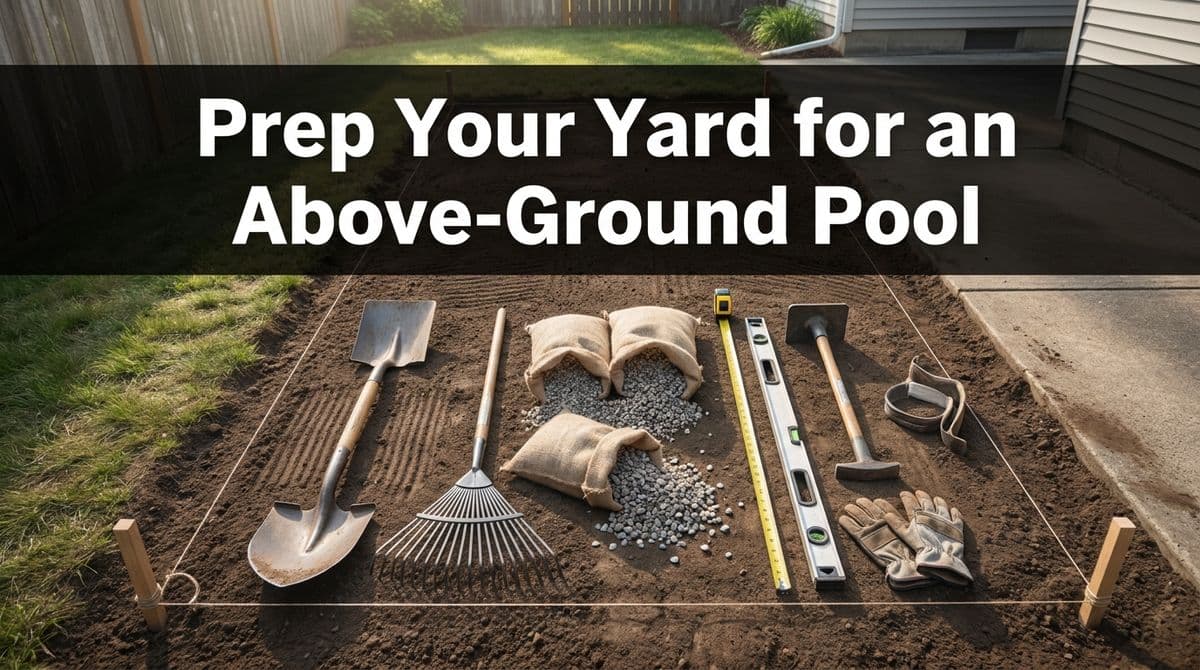
Leveling a Yard for an Above-Ground Pool: What We Tell Homeowners
We recently got a call from a homeowner — let’s call him Mike — who had just bought a $600 above-ground pool from Costco for his kids. He’d already started digging with a shovel, quickly realized how long it was going to take, and called us asking, “Is it worth hiring you to level this, or should I just keep going myself?”
Mike also had a few big questions:
- How level does the pool area really need to be?
- Do we recommend a sand base, or is compacted dirt enough?
- How deep should the cut be?
- What about drainage and utilities underground?
We’ll walk you through the same advice we gave Mike, so you can decide how to prepare your own yard and when it makes sense to bring in a contractor.
How Level Does an Above-Ground Pool Really Need to Be?
If you search online, you’ll see a lot of “perfectly level” talk. In reality, for most backyard above-ground pools, being within about an inch over the whole footprint is usually acceptable. That might not sound like much, but over 18–20 feet, an inch is actually pretty tight.
What happens if you’re off more than that? You’ll notice:
- Uneven water line — higher on one side, lower on the other.
- More stress on the low side — where the water is deeper.
- Spillover issues — similar to what we see with unlevel hot tubs (water pouring over on one end, several inches down on the other).
Can a slightly imperfect base still work? Yes, especially for a budget pool. But the closer you get to level now, the less you’ll notice these issues later.
Base Materials: Dirt vs. Sand (What We Recommend)
Mike’s original plan was to set the pool right on compacted dirt. He asked if that was “good enough” or if he really needed sand underneath.
Here’s our honest take:
- Compacted dirt only
Fastest option, but you’ll often feel ridges, small rocks, and bumps underfoot. As the pool fills and the weight settles, whatever is in the soil tends to telegraph through the liner. - Compacted sand base (our preference)
We like to remove enough soil to add a solid layer of sand, then compact it thoroughly. This protects the liner from rocks pushing up, makes it easier to get things truly level, and gives that cushy, in-ground-pool feel on your feet.
Is sand more work? Definitely. But it usually pays off in comfort, liner protection, and long-term stability. For a pool your kids will be using all summer, that upgrade is often worth it.
How Deep Should You Dig for an Above-Ground Pool?
Mike’s yard had about an eight-inch difference between the highest and lowest spots where the pool would sit. He wasn’t too worried about the final depth; he mainly wanted it level and planned to dig a border around it later for looks.
Our rule of thumb:
- Cut into high spots rather than building up low spots with loose fill, whenever possible.
- Remove topsoil (grass and organic layer) and get down to more stable clay or compactable subsoil.
- Dig 4–6 inches below your final grade if you plan on adding and compacting sand.
The deeper you go into solid, non-organic soil (within reason), the better your compaction and long-term stability will be. We’re not talking about going two feet down, but often an extra 4–6 inches makes a big difference.
Drainage and Underground Utilities: Don’t Skip These
Drainage Around the Pool Area
You don’t want water collecting around the base of the pool or running toward your house. As you plan the pad:
- Make sure the surrounding yard slopes gently away from the pool and your foundation.
- Consider a border of rock or pavers around the pool instead of grass right up to the wall — this helps with mud and mowing.
- Avoid creating a “bowl” where water will sit after rain.
Call Before You Dig
We also talked with Mike about 811 / Gopher State One Call. Any time we’re planning to dig more than a couple of inches, we want utilities marked. Even in backyards, there can be gas lines, electric, cable, or fiber that don’t always follow the path you’d expect.
In our service agreements, homeowners are responsible for having utilities marked. Even if you’ve had contractors out before, it’s smart to call again before you or anyone else starts removing soil for a pool pad.
DIY vs. Hiring a Contractor: Where’s the Break-Even Point?
For Mike, the big question was whether to keep swinging the shovel or hire us. He also asked about haul-away: he’d been dumping dirt under his deck but wondered how much extra it would cost to have us take it.
Here’s how we walked through it with him, and how you can think about it for your own project:
- DIY makes sense when you have time, a relatively small height difference (a few inches), soft soil, and you’re okay with “pretty good” instead of laser-perfect.
- Hiring a contractor makes sense when you’re staring at 6–8 inches or more of difference, the area is large, or the soil is hard and compacted. Time and your back have value.
With equipment, we can often do in about an hour what might take a weekend (or more) by hand. But there are fixed costs for us — loading and moving equipment, fuel, mobilization — so even a small job like Mike’s still comes with a minimum charge on our end.
Haul-away is similar. We usually charge a flat rate that covers the trailer, dump fees, and time. If you have a friend’s trailer and live near a dump site like Mike did, doing your own disposal can be a good way to save money.
Key Takeaways for Preparing Your Pool Site
Here’s the short version of what we shared with Mike:
- Shoot for within about 1 inch of level across the entire pool area.
- Cut into high spots and remove topsoil to reach stable subsoil.
- Consider a compacted sand base for comfort and liner protection.
- Plan for good drainage and a clean border around the pool.
- Call 811 before any significant digging.
- If the project starts to feel like a second job, it may be time to call a contractor.
If you’re looking at your own yard, shovel in hand, and wondering whether to keep going or bring in equipment, we’re always happy to talk through options and help you find the best balance between budget, effort, and long-term results.